Castle Hill Cemetery, Castle Hill
Dharug Nation
Located in Sydney, Australia Taylor Brammer Landscape Architects with Welsh + Major Architects created a new contemporary vision for the 140-year-old bushland cemetery. The site is located on the land of the Bidjigal people on Dharug country.
The brief was to respect and embrace the existing natural and commemorative character of this traditional bushland cemetery whilst creating a memorable and deferential cemetery landscape catering to the changing needs of the local community.
This appreciation of the place identified the most enduring natural quality of the site to be the 8.2- hectare existing bushland setting. The surrounding bushland provided design inspiration which included the warm and highly textured barks of Eucalyptus trunks, the textured surface of sandstone, smooth fine seams of clay and the presence of sky.
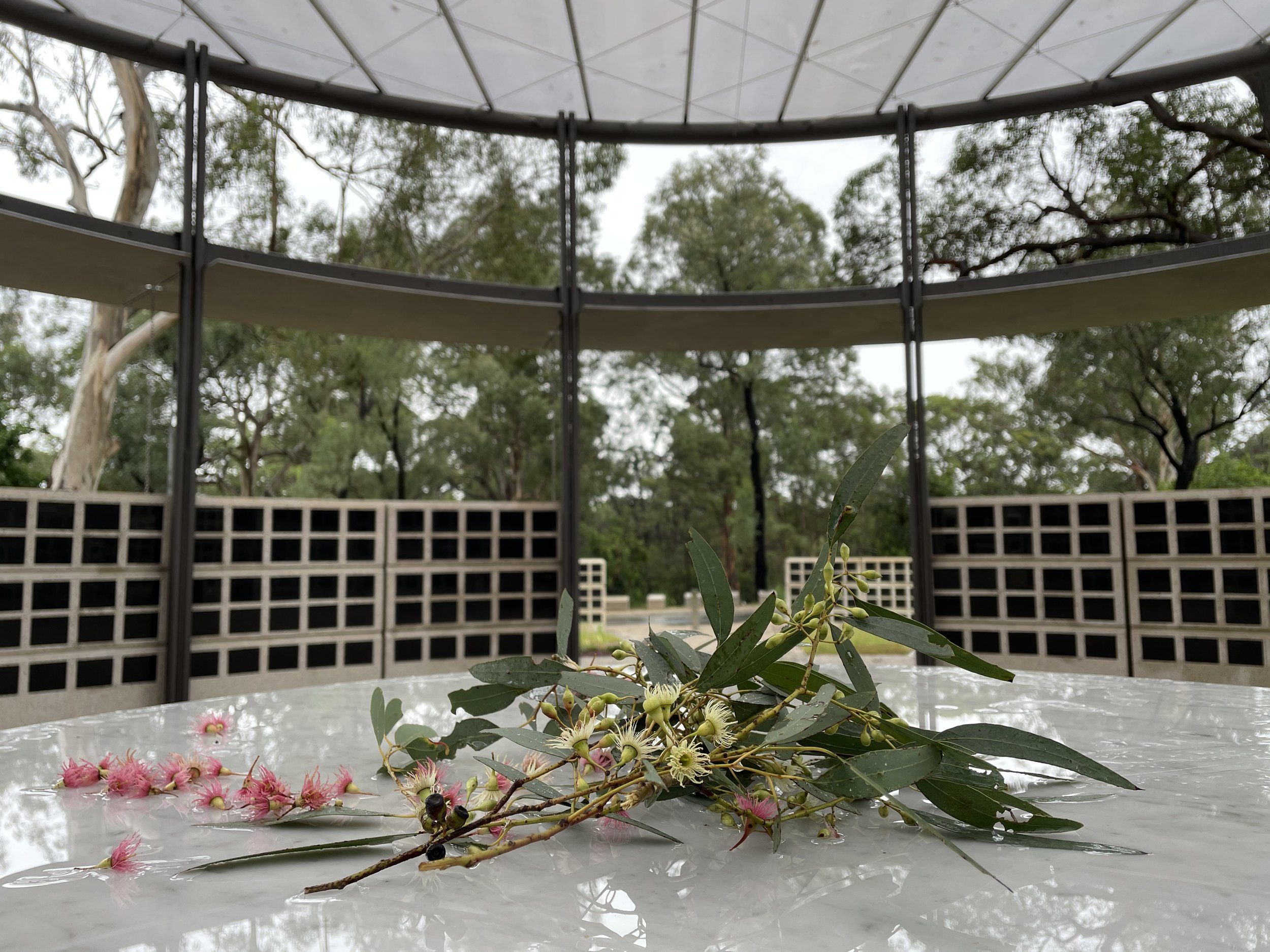
The masterplan rejuvenated the existing cemetery with new landscape works, walking tracks, parking areas, a new public internment vault, public crypt, columbarium walls, office building and a new centrepiece, known as the Sanctuary, a sheltered space for people to come together and celebrate the lives of their friends and family in comfort and dignity.
The centrepiece of this new masterplan conceived by Taylor Brammer – The Sanctuary – led Welsh & Major to explore the idea of commonalities - commonalities shared in grieving and celebrating; quiet contemplation and public proclamation:
- a focus (hearth/ light);
- a place to sit, as one or as many;
- a centrepiece/ table (tabula/mensa);
- shelter
The building form of The Sanctuary grew from our discussions on how we could empathetically provide the essentials for a space that deals with emotions that travel with ceremony - of contemplation, mourning, celebration, and loss.
Designing a space that engages sensitively with emotion drew us to explore how best to use light to define place – a translucent roof hovers above contrasting ringed roof forms assembled from bead blasted steel and polished chrome. This creates a circle of light with an ethereal quality enhanced by the native bushland setting that surrounds it.
The focal point of the space is the marble topped mensa, which provides a metaphorical centre to the space. Flanked by precast concrete benches topped in Australian hardwood, the space is cradled by the precast columbarium walls that define the footprint of the structure.
The material palette is intentionally restricted to pre-cast concrete, fabricated metal, and selected natural stone which creates a sense of ease and repose for visitors amongst the existing bushland character. These selected materials carry a sense of permanence and eternal nature, fostering an inviting and calm landscape setting.
Set at the centre of the reimagined cemetery, The Sanctuary offers a destination within the grounds that provides community members of all faiths and denominations a place of generosity, dignity contemplation and peace.
The shared vision for the place has created a unique outcome that establishes metaphorical connections with the Heavens and Earth. Through the modulation of light, the ethereal quality of the built form is complemented by the native bushland textures, highlighted by the bark of the surrounding rough barked eucalyptus forest.
Awards
The Chicago Athenaeum Museum for Architecture and Design 2022 International Architecture Awards
Honourable Mention - Castle Hill Cemetery
Australian Institute of Architects, NSW Chapter 2022
Winner - Castle Hill Cemetery; Category: 2022 Robert Woodward Award for Small Project Architecture